Quick Answer
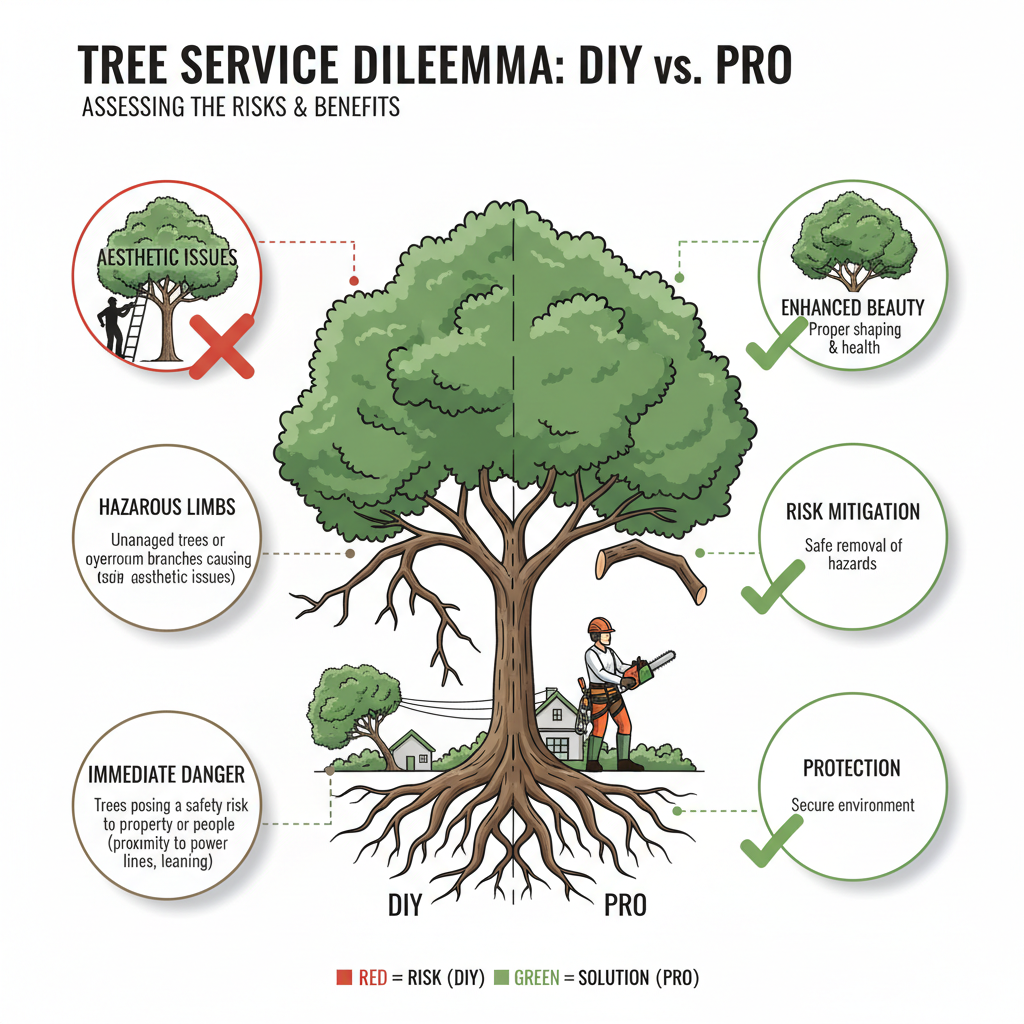
Okay, so here's the quick version. If you can keep both feet flat on the ground and use small hand tools like pruners or loppers on a branch no thicker than your wrist, you can probably tackle it yourself. This might cost you $30-$150 for decent tools. But the second you think about using a ladder, a chainsaw, or working anywhere near power lines, you stop. You just stop. A professional arborist might charge $150-$450 for a small trim or $300-$1500+ for larger branch removal, but a mistake on your own can lead to severe injury, property damage (like a new roof), or even death. It's not worth the risk.
Common Symptoms
Possible Causes
Step-by-Step Diagnosis
Step 1
The 'Walk Around' - Get a 360-degree view of the tree's posture and lean.
Step 2
The 'Binocular Scan' - Look for deadwood, cracks, and hanging branches high up.
Step 3
The 'Trunk & Base Inspection' - Look for fungus, mushrooms, and deep cracks at ground level.
Step 4
The 'Species ID' - Figure out what kind of tree it is to understand its common weaknesses.
Step 5
The 'Danger Zone' Assessment - Determine exactly what will be hit if the tree or a major limb fails.

DIY vs Professional Costs
| Repair Type | DIY Cost | Professional Cost | Time Required |
|---|---|---|---|
Small Pruning (from the ground) | $30 - $150 | $150 - $450 | 1-2 hours |
Large Branch Pruning (at height) | N/A (strongly discouraged) | $300 - $1,500+ | 2-4 hours |
Full Tree Removal (Large Tree > 25 ft) | N/A (professionally required) | $800 - $6,000+ | 1-2 days |
When to Call a Professional Tree Service
- Anytime a chainsaw or a ladder is required for the job.
- If the tree or its branches are within 10 feet of a power line. Don't even think about it.
- When the tree is dead, leaning significantly, or shows signs of major rot (like large fungus on the trunk).
- For the removal of any tree taller than a single-story house.
- If you lack the proper training, safety equipment, or just have a bad feeling about the job. Trust your gut.
Prevention Tips
- Schedule a regular check-up with a certified arborist every 2-3 years.
- Plant the right tree in the right spot; research its mature size before you plant.
- Give your trees a deep watering during long droughts to reduce stress.
- Mulch around the base, but don't pile it against the trunk like a volcano, which causes rot.
Frequently Asked Questions
Related Guides
Tree Removal vs. DIY Tree Cutting (Troubleshooting & Fixes)
Thinking about cutting down that tree yourself? As a guy who's seen it all go wrong, here's my honest take on when to DIY and when to call a pro.
Deciding between DIY tree care/removal and hiring professional tree services, considering costs, risks, and benefits. Troubleshooting & Fixes
Deciding on DIY Tree Work vs. Hiring a Pro (My Two Cents)
A veteran tech's brutally honest guide on DIY tree trimming vs. calling a pro. Learn when to save a buck and when you're risking your life and your house.
DIY Tree Work vs The Pros: When to Call for Backup (A Reality Check)
Thinking of DIY tree work? A 25-year vet explains the risks. Learn when to tackle it yourself and when calling a pro is the only smart move.
Neglecting Tree Maintenance vs. Professional Tree Services Troubleshooting & Fixes
Unexplained tree decline, leading to visible signs of distress or death in trees without an obvious cause. Troubleshooting & Fixes
Is your tree just not looking right? A veteran arborist explains how to diagnose vague symptoms like leaf yellowing or thinning canopy and when to call for help.
Need Professional Help?
Find top-rated tree service experts in your area